Reordering From a Bluetooth Wireless Portable Speaker Manufacturer: What Stays & What to Recheck
Reordering From a Bluetooth Wireless Portable Speaker Manufacturer: What Stays & What to Recheck
When reordering audio products for your business, working with a reliable bluetooth wireless portable speaker manufacturer is the first step to consistent success. For Portable Speaker Importers, E-commerce Sellers, and Consumer Electronics Brands, repeat orders should balance cost efficiency, quality stability, and market relevance.
This guide breaks down non-negotiable standards to maintain and critical factors to reevaluate before placing your next bulk order with a portable speaker manufacturer. Whether you supply travel Bluetooth speakers to retail chains or custom branded units for corporate gifting, these checks protect your profit margins and brand reputation.
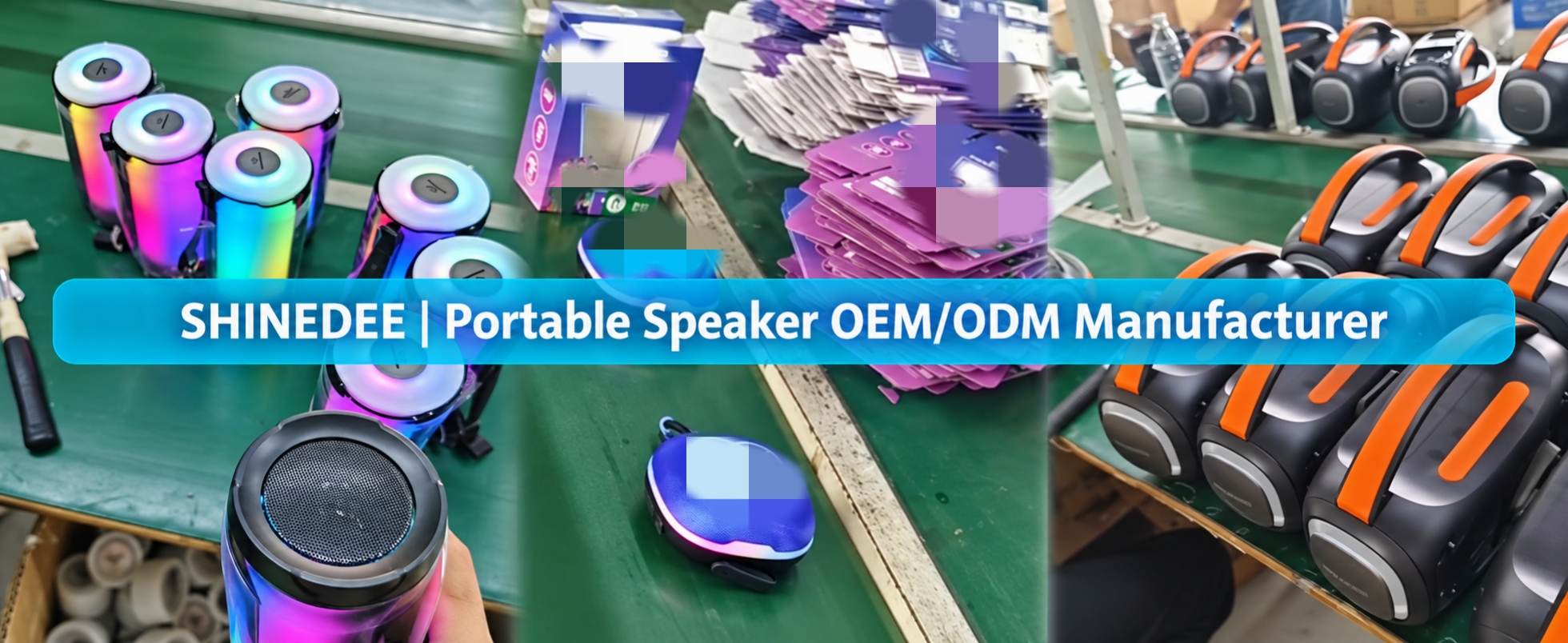
1. Core Specifications That Must Stay Identical in Every Reorder
Consistency is the foundation of trust for any Bluetooth speaker OEM supplier. When reordering best-selling models, changing core specs can lead to customer complaints, return spikes, and lost repeat business. These non-negotiable features define your product’s market positioning and must remain exactly the same across batches.
1.1 Fixed Performance & Build Standards for Consistent Quality
For example, the core value of a 20W waterproof portable speaker lies in its predictable performance. Your OEM 20W black IPX6 water resistance bluetooth wireless portable speaker manufacturer should lock in these specs as non-adjustable defaults for repeat orders:
• 20W audio output with matching bass tuning and frequency response range
• IPX6 water resistance rating, verified to withstand high-pressure water jets from all directions
• Black matte/scratch-resistant exterior finish with exact Pantone color matching
• Bluetooth 5.3 connectivity with 10-meter stable transmission range
• 3000mAh rechargeable battery with 12-hour playtime at 50% volume
For Consumer Electronics Distributors and Mobile Accessories Distributors, even a 10% drop in battery life can reduce product review scores by 1.5 stars, according to 2024 e-commerce audio product data. Rechargeable speakers with consistent performance also build loyalty among outdoor & camping product distributors who rely on durable, reliable inventory.
1.2 Branding & Packaging Elements That Preserve Recognition
Your product’s visual identity is tied directly to customer recall. A professional custom Bluetooth speaker manufacturer will maintain strict branding consistency for every reorder, including:
• Exact logo placement (top surface, bottom engraving, or front grille printing)
• Custom packaging design with matching material thickness and printing quality
• User manual language versions and regulatory label placement (FCC, CE, RoHS)
• Accessory kit contents (USB-C cable, user guide, lanyard, warranty card)
For Private Label Electronics Brands and Promotional Products Distributors, mismatched packaging can make new inventory feel counterfeit to repeat customers.
Corporate Gift Suppliers also depend on consistent branding to deliver uniform orders for large corporate clients with multiple regional offices.
Custom branding solutions for portable speakers
2. Supply Chain & Cost Factors to Recheck Before Reordering
Even if your product specs stay the same, supply chain conditions shift constantly. A trusted portable speaker wholesale supplier will be transparent about cost drivers and lead time changes, but proactive buyers verify these details before signing off on repeat orders.
2.1 Pricing Structure & Hidden Cost Variations
Raw material prices for audio components fluctuate quarterly, and a reliable wireless speaker manufacturer will share cost breakdowns instead of raising prices without explanation. Before reordering, confirm these cost-related details:
• Unit price for base models, and tiered discounts for larger order volumes
• Mold/tooling fees (should be waived for repeat orders of existing designs)
• Shipping cost changes for sea/air freight, and DDP/FOB term options
• Customization surcharges for minor adjustments like logo color changes
• Warranty and after-sales service costs included in the unit price
For Electronics Wholesalers and Digital Accessories Wholesalers, a $0.5 per unit price increase can cut profit margins by 8-12% for high-volume SKUs.
China portable speaker manufacturer partners often offer 3-5% bulk discounts for orders placed 2 weeks ahead of peak shipping seasons, so plan reorders strategically.
2.2 Production Lead Time & Inventory Stability
Lead time delays can cause stockouts for E-commerce Sellers and missed sales windows for Electronics Retail Chains. When reordering from an OEM Bluetooth speaker factory, verify these supply chain metrics:
• Current production capacity and average lead time for standard 20W IPX6 models
• Component stock levels for core parts (speaker drivers, battery cells, Bluetooth chips)
• Backup production lines for rush orders or unexpected demand spikes
• Minimum order quantity (MOQ) for repeat orders, and flexibility for small batch top-ups
• Warehouse storage options for split shipments to multiple regional distribution centers
A 2024 supply chain report shows that 32% of portable audio stockouts are caused by unconfirmed lead times, not actual production shortages.
Portable audio brands that confirm lead times 2 weeks in advance reduce stockout risk by 47% compared to brands that place last-minute reorders.
3. Market Fit Adjustments to Optimize Reorder Performance
Reordering doesn’t mean copying your last purchase exactly. Market trends change, customer feedback accumulates, and small adjustments can boost sales without disrupting your core product identity. A flexible ODM portable speaker manufacturer can help you implement low-cost, high-impact tweaks.
3.1 Feature Tweaks Based on Customer Feedback
Review customer reviews and support tickets from your last batch to identify small upgrades that address common pain points. Popular low-effort adjustments for portable wireless speakers include:
• Adding a built-in microphone for hands-free calling (portable speakers with microphone SKUs have 18% higher average selling prices)
• Upgrading to USB-C fast charging to match modern device standards
• Adding TWS Bluetooth speaker pairing functionality for stereo sound
• Including a detachable carry strap for outdoor portable speakers
• Adding voice assistant compatibility for smart home integration
For travel Bluetooth speakers and mini Bluetooth speakers, even a 10g weight reduction can improve customer satisfaction scores for frequent travelers.
Party speakers and portable party speakers can benefit from added LED light modes, which drive higher engagement among younger consumer segments.
3.2 Compliance & Regulatory Updates for Target Markets
Regulatory requirements change regularly, and non-compliant inventory can be held at customs or recalled. A reputable portable speaker manufacturing company will stay updated on global standards, but buyers should confirm compliance for their specific markets:
• Latest FCC/CE/RoHS certification validity for the target region
• Battery shipping regulations (UN38.3, IEC62133) for air and sea freight
• Packaging recycling requirements (EU WEEE directive, California plastic tax)
• Wireless spectrum compliance for new markets you plan to expand into
• Product labeling requirements for energy efficiency or chemical content disclosures
For Portable Speaker Distributors and Bluetooth Speaker Distributors expanding into the EU, updated WEEE registration requirements take effect in 2025, so plan reorders to align with new labeling rules.
Outdoor & camping product distributors also need to confirm that waterproof rating testing is up to date, as some markets now require third-party verification for IP claims.
4. Quality Control Protocols to Reinforce for Repeat Orders
Even long-term supplier relationships require consistent quality checks. A reliable ODM Bluetooth speaker factory will have standardized QC processes, but adding custom checkpoints for your specific product reduces defect rates and protects your brand.
4.1 Pre-Production & In-Line Quality Checks
Pre-production verification prevents large-scale defects before manufacturing starts. When working with a custom portable speaker manufacturer, include these checkpoints in your reorder agreement:
• Pre-production sample approval signed off by both parties before mass production
• In-line inspection at 30% production completion to catch assembly errors early
• Component batch verification to ensure no substitution of core parts (batteries, drivers)
• Waterproof testing for 10% of units during production to confirm IPX6 performance
• Bluetooth connectivity range testing for every 50th unit on the production line
For rechargeable portable speakers, battery cell verification is critical—substandard cells increase fire risk and can lead to costly product recalls.
4.2 Final Batch Inspection & After-Sales Support
Final inspection ensures your order meets specifications before it leaves the factory. Work with your portable speaker supplier to define these final QC and support terms:
• AQL 2.5/4.0 standard final inspection, or custom stricter standards for premium brands
• Random drop test and water immersion test for 1% of final production units
• Packaging integrity testing to prevent damage during long-distance shipping
• Defect replacement policy and turnaround time for faulty units
• Technical support for your customer service team to handle common product questions
For E-commerce Sellers and C-level Executives focused on brand reputation, a 0.5% defect rate threshold is the industry benchmark for high-quality portable stereo speakers. Portable sound system and Bluetooth boombox buyers should also confirm spare part availability for after-sales repairs, as larger units have more replaceable components.
Reordering from a water resistance bluetooth wireless portable speaker manufacturer doesn’t have to be a gamble. By locking in core specs, verifying supply chain details, optimizing for market fit, and reinforcing quality control, you can turn repeat orders into predictable, high-margin revenue streams.
Whether you’re a small portable speaker factory partner or a large-scale importer, these checks ensure every batch matches the quality your customers expect.
5.How Shinedee Supports Repeat Speaker Orders
Founded in 2010, Shenzhen Shinedee Electronics Co., Ltd. manufactures RGB gaming speakers and outdoor waterproof RGB Bluetooth speakers for brands, importers, distributors, and wholesalers.
For repeat OEM and ODM orders, we work with customers to review the previously approved specifications, reference samples, and packaging files. Key details include sound tuning, battery configuration, Bluetooth functions, RGB settings, logo placement, and accessories. These references guide production and quality checks for the next batch.
If a component replacement or product adjustment is proposed, we review its potential impact and confirm the change with the customer before implementation. Feedback from previous shipments also helps identify points that need closer attention in future production.