Bluetooth Speaker Certifications Guide: CE, FCC, RoHS, UKCA & KC Explained (2026)
Bluetooth Speaker Certifications Guide: CE, FCC, RoHS, UKCA & KC Explained
Introduction
For brands, importers, and distr
ibutors selling Bluetooth speakers globally, product certification is one of the most important steps before entering a market.
A speaker may have excellent sound quality and attractive design, but without proper compliance certification, it may face:
Import delays
Customs issues
Retail restrictions
Marketplace rejection
Customer trust problems
Understanding certification requirements helps buyers select the right OEM and ODM manufacturing partner.
This guide explains the most common Bluetooth speaker certifications required in global markets.
Why Certifications Matter for Bluetooth Speakers
Bluetooth speakers combine multiple technologies:
Wireless communication
Lithium batteries
Electronic circuits
Charging systems
Audio components
Because of this, they must comply with regulations covering:
Electrical safety
Radio frequency emissions
Environmental requirements
Battery safety
Professional manufacturers consider certification requirements during product development—not after production.
CE Certification (European Market)
What Is CE?
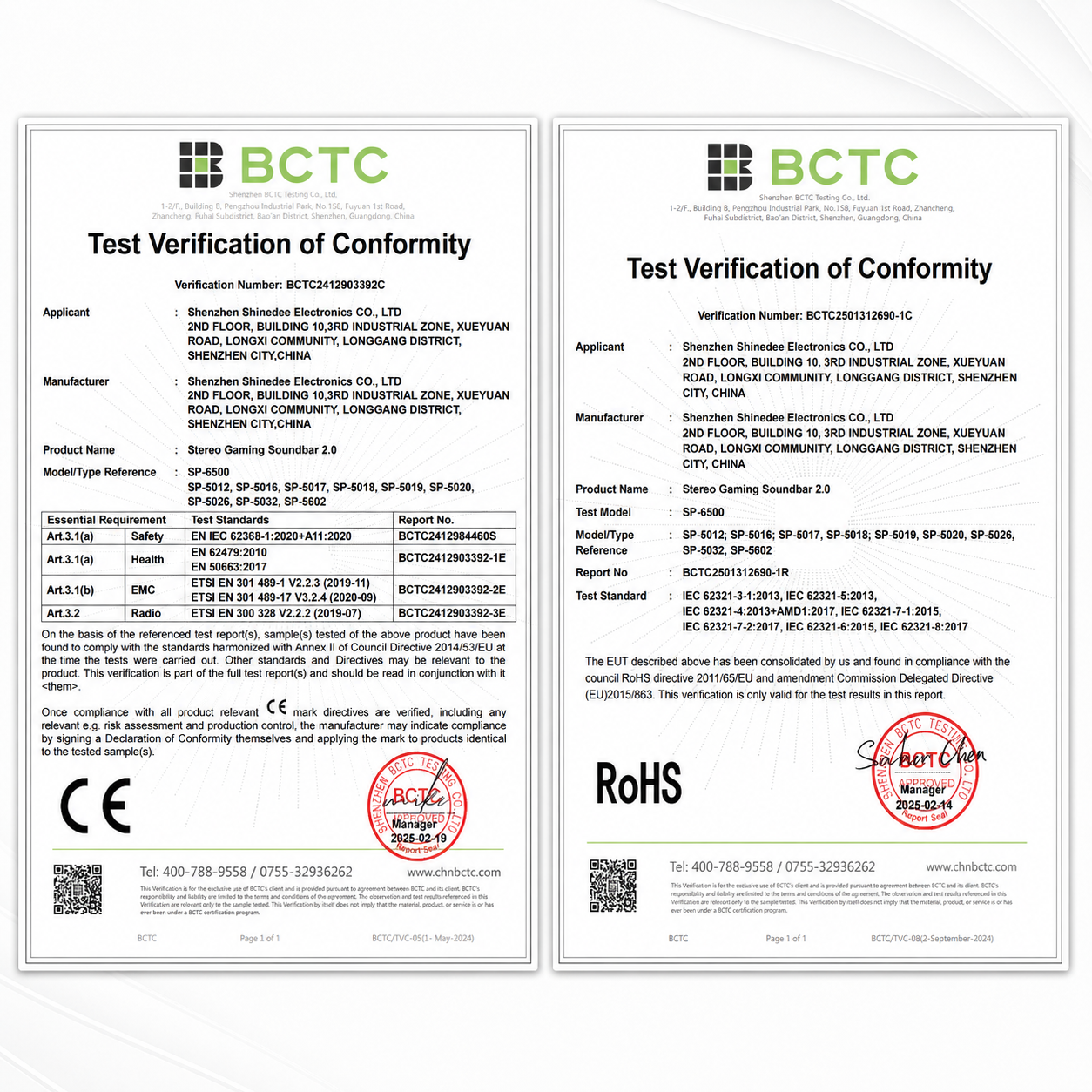
CE marking indicates that a product meets European Union safety, health, and environmental protection requirements.
For Bluetooth speakers, CE commonly covers:
Electromagnetic compatibility (EMC)
Radio equipment requirements
Safety standards
Why CE Matters
Without CE compliance, products may face:
Import restrictions
Retail limitations
Market access problems
For brands targeting Europe, CE is essential.
FCC Certification (United States Market)
What Is FCC?
FCC certification is required for many electronic devices sold in the United States.
For Bluetooth speakers, FCC mainly focuses on:
Radio frequency emissions
Wireless communication compliance
Why FCC Matters
FCC compliance ensures that Bluetooth devices operate without causing harmful interference.
It is especially important for:
Bluetooth modules
Wireless audio products
Smart electronics
RoHS Compliance (Environmental Requirement)
What Is RoHS?
RoHS restricts the use of certain hazardous substances in electronic products.
It controls materials such as:
Lead
Mercury
Cadmium
Other restricted substances
Why RoHS Matters
Many global markets require environmentally compliant electronics.
RoHS compliance supports:
Sustainable manufacturing
Safer products
International market access
UKCA Certification (United Kingdom)
What Is UKCA?
UKCA is the UK conformity marking used for products entering the United Kingdom market.
After Brexit, many products require UK-specific compliance.
Bluetooth speakers sold in the UK may need:
Radio compliance
Safety compliance
EMC testing
KC Certification (South Korea)
What Is KC?
KC certification is Korea's product safety and electromagnetic compatibility certification.
For Bluetooth speakers entering South Korea, manufacturers may need to meet:
Wireless communication requirements
Safety standards
EMC requirements
Other Important Compliance Considerations
Battery Regulations
Bluetooth speakers using lithium batteries may require:
Battery safety testing
Transportation compliance
UN38.3 testing
Packaging Requirements
Different markets may have requirements for:
Packaging materials
Recycling information
Labeling
How Certifications Affect OEM & ODM Development
Certification should be considered early during product development.
It affects:
Component selection
PCB design
Bluetooth module choice
Battery selection
Product testing
Late certification preparation may cause:
Delays
Additional costs
Product redesign
Certification Process for Bluetooth Speakers
A typical process includes:
Step 1: Product Evaluation
Engineers review:
Circuit design
Wireless modules
Battery system
Step 2: Sample Preparation
Manufacturers prepare testing samples.
Step 3: Laboratory Testing
Products are tested by qualified laboratories.
Step 4: Report Review
Testing results are reviewed and approved.
Step 5: Production Control
Mass production follows the approved specifications.
🏭 Real Factory Insight
In real OEM projects, certification problems usually happen because compliance is considered too late.
For example:
Changing a Bluetooth module after certification testing may require additional testing and delay shipment.
Experienced manufacturers consider certification requirements during the early design stage, helping brands avoid unnecessary costs and delays.
How Buyers Should Evaluate Certification Capability
Before selecting a speaker manufacturer, ask:
Which markets have you exported to?
Can you support CE/FCC/RoHS?
Do you work with certified testing laboratories?
Can you provide certification documents?
Are product changes controlled after certification?
These questions help identify experienced suppliers.
Why Choose Shinedee
Shenzhen Shinedee Electronics specializes in developing Bluetooth audio products for international markets.
Our products include:
RGB Gaming Speakers
Portable Bluetooth Speakers
Outdoor Waterproof Speakers
Gaming Soundbars
Computer Speakers
We support customers with:
Certification preparation
Product compliance guidance
OEM/ODM development
Quality control
Global export experience
With over 15 years of manufacturing experience, Shinedee helps brands develop audio products ready for worldwide markets.
Frequently Asked Questions
Do Bluetooth speakers need CE certification?
Yes, Bluetooth speakers sold in many European markets require CE compliance.
Is FCC required for Bluetooth speakers in the USA?
Yes, wireless Bluetooth products generally require FCC compliance.
Is RoHS mandatory?
It depends on the target market, but many regions require RoHS-compliant electronics.
Does every product modification require new certification?
Major changes to wireless modules or electrical systems may require additional evaluation.
Can manufacturers help with certification?
Yes. Experienced OEM manufacturers usually assist with compliance preparation and testing coordination.
Conclusion
Certifications are a critical part of successful Bluetooth speaker manufacturing and global market entry.
A reliable OEM and ODM partner should understand certification requirements from the beginning of product development.
By working with an experienced manufacturer, brands can reduce compliance risks, accelerate product launches, and build stronger confidence in international markets.
Shinedee supports global customers with professional manufacturing solutions designed for worldwide distribution.