Private Label Bluetooth Speaker Guide: How to Build Your Own Audio Brand in 2026
Private Label Bluetooth Speaker Guide: How to Build Your Own Audio Brand in 2026
Introduction
Building a successful audio brand no longer requires owning a factory or investing millions in manufacturing infrastructure.
Today, entrepreneurs, Amazon sellers, retailers, and consumer electronics companies can create their own Bluetooth speaker brands through private label manufacturing.
With the support of an experienced OEM and ODM manufacturer, businesses can develop branded products with:
Custom designs
Professional packaging
Unique features
Reliable production quality
This guide explains how to build a private label Bluetooth speaker brand from concept to market launch.
What Is a Private Label Bluetooth Speaker?
A private label Bluetooth speaker is a product manufactured by a factory and sold under a customer's own brand name.
The manufacturer provides:
Product development
Manufacturing
Quality control
Supply chain support
The brand owner manages:
Branding
Marketing
Sales channels
Customer relationships
This business model allows companies to enter the audio market without owning a production facility.
Why Private Label Audio Brands Are Growing
Several market trends create opportunities for new audio brands.
Growing Demand for Wireless Audio
Consumers increasingly use Bluetooth speakers for:
Home entertainment
Travel
Outdoor activities
Gaming
Lifestyle experiences
Expansion of E-Commerce
Platforms such as:
Amazon
Shopify
Walmart Marketplace
Regional e-commerce platforms
allow new brands to reach global customers.
Consumer Preference for Differentiation
Customers are no longer looking only for cheap products.
They value:
Unique design
Better experience
Brand identity
Premium packaging
Step 1: Define Your Brand Positioning
Before choosing products, define your target market.
Examples:
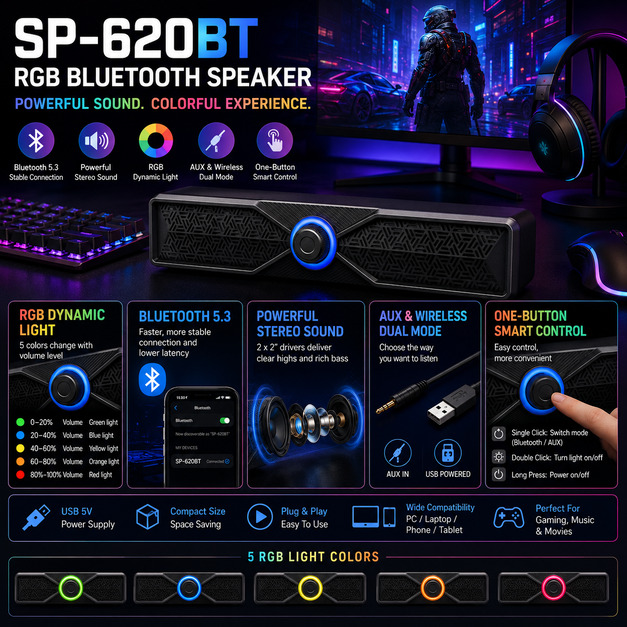
Gaming Audio Brand
Focus on:
RGB lighting
Gaming setup aesthetics
Immersive sound
Outdoor Lifestyle Brand
Focus on:
Waterproof performance
Durability
Adventure scenarios
Premium Lifestyle Brand
Focus on:
Design
Sound quality
Brand experience
Clear positioning helps determine the right product strategy.
Step 2: Choose the Right Speaker Category
Popular private label categories include:
RGB Gaming Speakers
Advantages:
Strong visual appeal
Growing gaming market
Higher perceived value
Portable Bluetooth Speakers
Advantages:
Broad consumer demand
Multiple usage scenarios
Outdoor Waterproof Speakers
Advantages:
Lifestyle positioning
Premium opportunity
Soundbars
Advantages:
Higher product value
Home entertainment market
Step 3: Select an OEM/ODM Manufacturing Partner
The right factory is critical to brand success.
Evaluate:
Manufacturing Experience
Look for:
Speaker specialization
Export experience
Product development history
Engineering Capability
Important capabilities:
Industrial design
Acoustic tuning
Structural engineering
Firmware development
Quality Management
Check:
Testing procedures
Production inspection
Reliability systems
Step 4: Customize Your Products
Private label does not mean only adding a logo.
Modern brands customize:
Product Design
Colors
Materials
Appearance
Audio Performance
Sound tuning
Bass adjustment
EQ optimization
Features
RGB lighting
Battery capacity
Connectivity options
Packaging
Professional packaging improves:
Brand recognition
Retail value
Customer experience
Step 5: Build Your Brand Identity
A successful audio brand requires more than hardware.
Important elements include:
Brand Name
Should communicate:
Target audience
Product positioning
Brand personality
Visual Identity
Includes:
Logo
Colors
Packaging style
Website design
Product Story
Customers connect with:
Lifestyle
Experience
Innovation
Step 6: Plan Your Market Launch
Before launch, prepare:
Product Content
Including:
Product photos
Videos
User guides
Sales Channels
Examples:
Amazon
Independent website
Retail partners
Distributors
Marketing Strategy
Channels include:
SEO
Social media
Influencer marketing
Email marketing
Step 7: Scale Your Product Line
Successful brands rarely stop at one product.
They expand into:
New speaker models
Different price levels
Complementary accessories
A strong manufacturing partner helps support long-term expansion.
🏭 Real Factory Insight
Many new brands focus heavily on the first product launch.
However, successful audio brands usually think beyond one product.
The strongest partnerships are built around:
Future product planning
Continuous improvement
Market feedback
New product development
A good OEM partner becomes part of the brand's growth journey.
OEM vs ODM for Private Label Brands
ODM
Best for:
Faster launch
Lower investment
Market testing
OEM
Best for:
Unique products
Brand differentiation
Long-term competitiveness
Why Choose Shinedee
Shenzhen Shinedee Electronics helps global brands develop private label audio products.
Our services include:
Product concept development
OEM manufacturing
ODM solutions
Industrial design support
Acoustic optimization
Packaging customization
Quality control
Product categories:
RGB Gaming Speakers
Portable Bluetooth Speakers
Outdoor Waterproof Speakers
Gaming Soundbars
Computer Speakers
With over 15 years of manufacturing experience, Shinedee supports brands from the first idea to successful product launch.
Frequently Asked Questions
Can I create my own Bluetooth speaker brand?
Yes. Private label manufacturing allows businesses to build branded products without owning a factory.
How much investment is needed?
Investment depends on product type, customization level, and order quantity.
Do I need my own design?
Not necessarily. ODM solutions allow brands to start with existing product platforms.
Can I customize packaging?
Yes. Packaging customization is an important part of private label branding.
Is OEM better than ODM?
OEM provides more customization, while ODM offers faster market entry.
Conclusion
Private label Bluetooth speakers provide an excellent opportunity for entrepreneurs and established companies to build their own audio brands.
With the right product strategy and an experienced OEM/ODM manufacturing partner, companies can create differentiated products, reduce development risks, and compete successfully in global markets.
Shinedee helps brands transform ideas into market-ready audio products through professional manufacturing solutions.